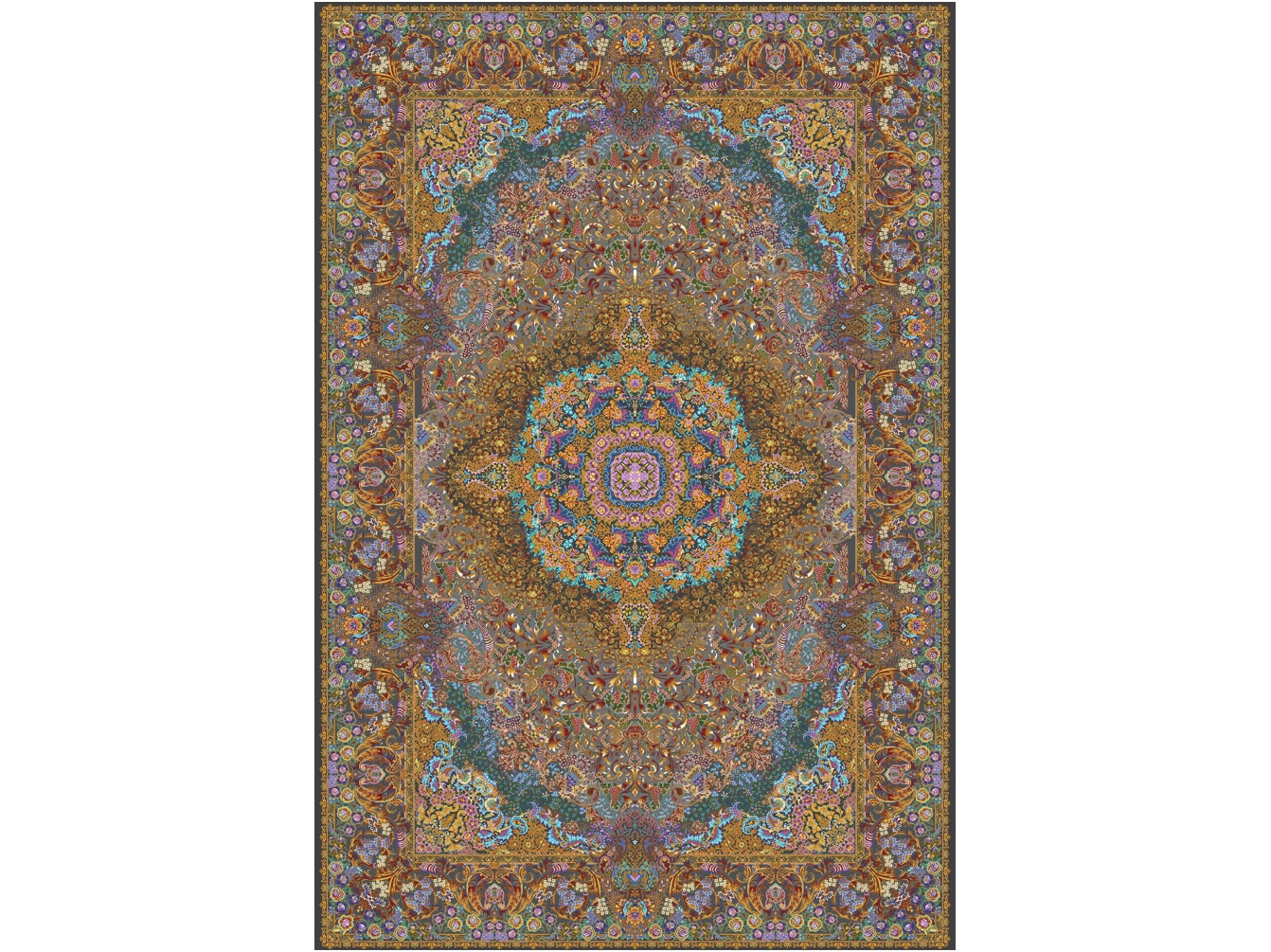
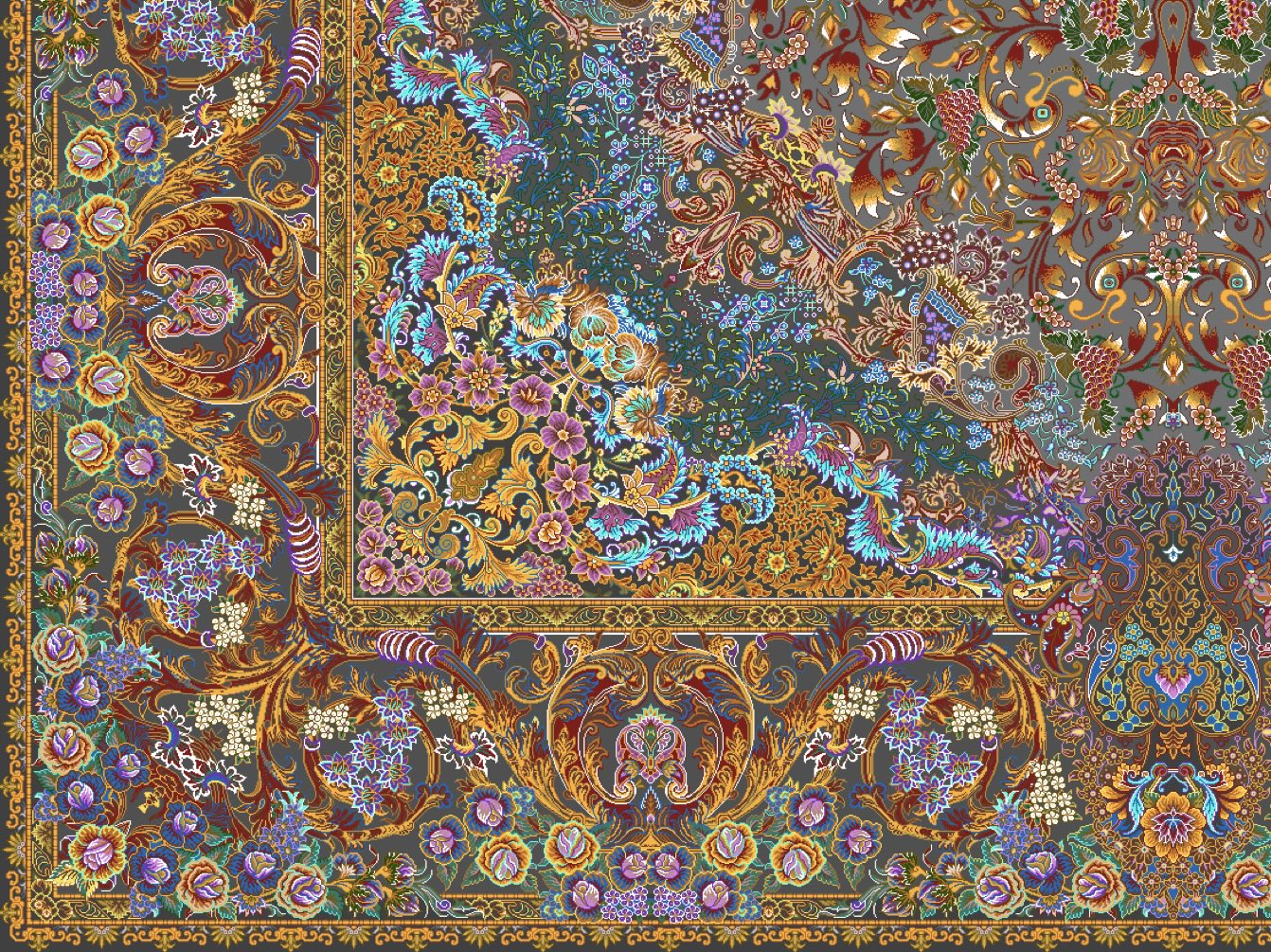
A regal masterpiece honoring Kourosh the Great, where golden rays and sapphire vines encircle a majestic central medallion like the imperial crown of ancient Persia. Hand-knotted in finest silk, this rug radiates the wisdom, tolerance, and boundless vision of the founder of the world’s first great empire — a timeless symbol of Persian glory and enduring sovereignty.
The finest silk begins with the mulberry-fed silkworm. It originates from Bombyx mori silkworms raised on mulberry leaves, producing long, uniform filaments with exceptional softness, strength, and natural sheen. It drinks in acid dyes deeply, so colors stay rich and luminous for generations. At Sakina Traditional Persian Rug, we use only Grade-A Mulberry silk—crafted to be an heirloom, not just a purchase.
About Silkworms and Silk Types
For over 4,000 years, silk has been one of the most coveted textiles in the world. From ancient China through the great Silk Road into Persia, silk has carried a reputation for beauty, strength, and timeless luxury.
There are two main categories of silk: non-Mulberry silks and Mulberry silk.
• Non-Mulberry silks — such as Tussah, Muga, and Eri — come from wild silkworms that feed on plants other than mulberry leaves. These silks have their own character, often coarser in texture, with more natural tones. They are beautiful in their way, but not as fine or lustrous.
• Mulberry silk comes from the Bombyx mori silkworm, which feeds only on mulberry leaves. This is considered the finest silk in the world — prized for its softness, strength, and brilliant natural sheen. It also holds dyes exceptionally well: with acid dyes, Mulberry silk absorbs color deeply, keeping its shine and vibrancy for decades.
At Sakina Traditional Persian Rug, we use only Mulberry silk. Why? Because it is the highest grade, the smoothest in texture, and the most luminous in appearance. Our rugs are designed not only to be works of art today, but to carry their beauty forward for generations.
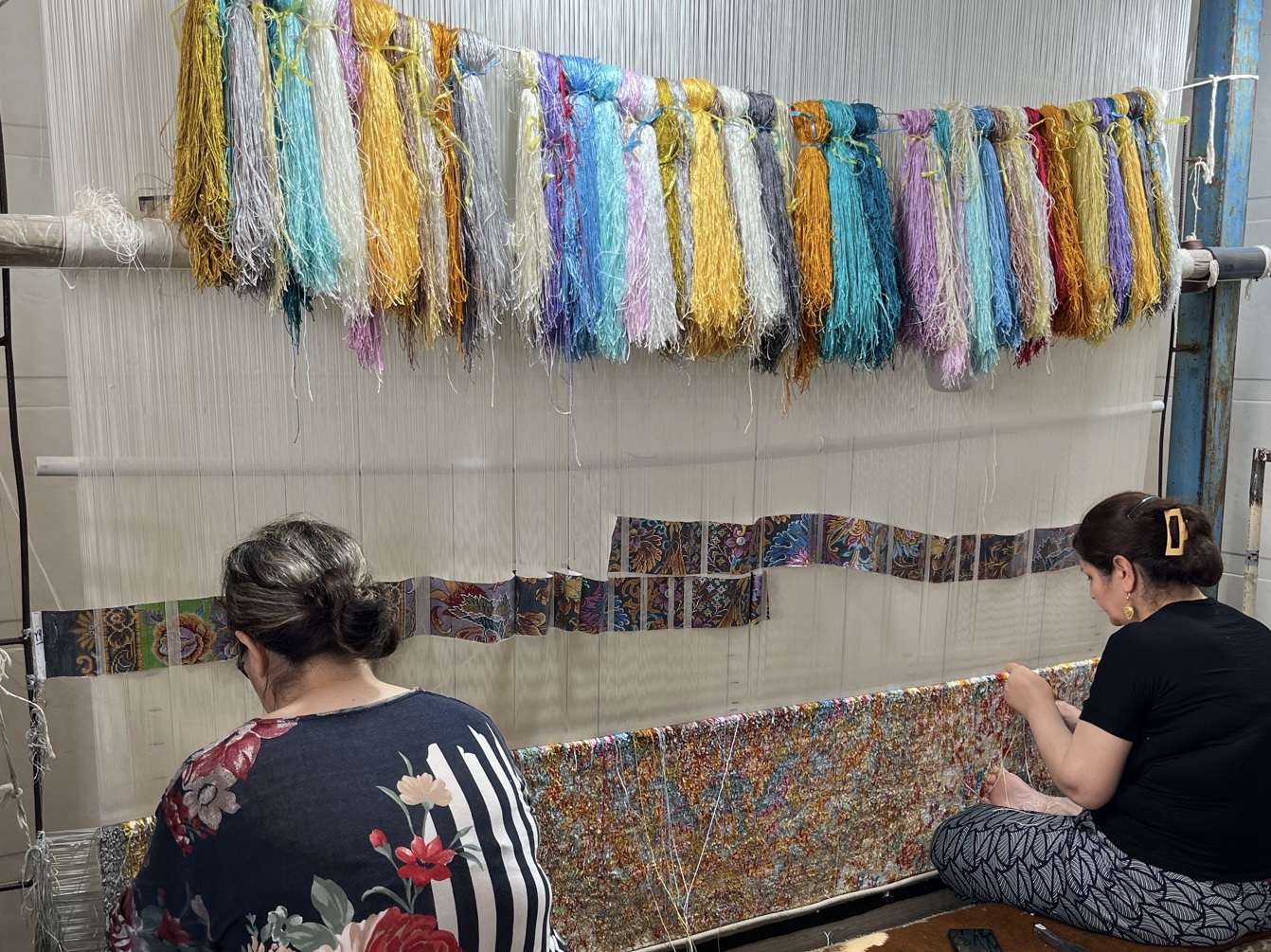
Our rugs are woven using the Persian (Senneh) knot, the most refined knot in the world. This asymmetrical knot is tied with the warp threads on two different levels, allowing for higher knot density, sharper details, and more intricate patterns. It is the most difficult knot to master — a technique perfected only by Persian artisans. At Sakina Traditional Persian Rug, every piece is created by these master weavers, carrying forward the heritage of true Persian craftsmanship.
Anatomy of a Hand-Knotted Rug
Every Sakina Traditional Persian Rug is a work of living art, built from the ground up. Here’s what goes into each piece:
• Warp – These are the long vertical threads that run the full length of the rug. The foundation. All knots are tied around them.
• Weft – Horizontal threads that weave across the width, layered between rows of knots. They help hold the structure together and ensure the rug doesn’t distort.
• Knots (Pile) – The visible surface of the rug. Each knot is hand-tied around one or more warp threads. The density and type of knot determine clarity, durability, and detail. We use the Persian knot with warp threads on two different levels — giving sharper detail and greater finesse in pattern.
• Fringe – The ends of the warp threads left visible at each end of the rug. More than decoration, it’s an unbroken continuation of the foundation itself.
• Overcasting / Edge Finish – A protective wrap of dyed yarn along the sides, prevents fraying and keeps edges crisp.
Knot Count & Quality
• Knot Density – Measured often in Knots Per Square Inch (KPSI). The more knots, the finer the design and longer-lasting the rug. Higher density allows for more detail and refined motifs.
• Persian Knot (Senneh Knot) – Asymmetric and demanding to execute. Only true masters in Persian weaving are fully fluent in this knot. We maintain that tradition in every rug we produce.
The Persian Soul Behind Every Rug
We moved Persian master weavers to our legal, ethical workshop, where tradition is preserved. This ensures we deliver:
• Rugs made with authentic Persian techniques
• The highest craftsmanship possible
• Pieces that will last decades, even centuries
Your silk rug is a masterpiece, woven to last generations. With mindful care, its beauty will endure:
• Vacuum lightly using suction only; avoid brushes and rollers.
• Rotate every few months to balance wear and fading.
• Keep away from direct sunlight to preserve luster and dyes.
• Blot spills immediately with a white cloth; never rub. Use cold water or a mild vinegar solution if needed.
• Dry flat in shade — never apply heat or hang by one edge.
• For deeper care, rely on professional silk rug specialists.
What Makes Silk Rugs Special / What You MUST Know
Silk is a natural, protein fiber. It looks amazing — glossy, fine, elegant — but it’s not very forgiving with heat, harsh chemicals, heavy scrubbing, or excess water.
Colors/dyes may bleed, fade, or run if the rug gets too wet or you use wrong detergents.
Silk can stretch if soaked. Drying slowly and correctly is critical.
Immediate Steps When Something Spills (like Coffee)
• Act Immediately
• Blot the spill right away. Use a clean, white, absorbent cloth or paper towel. Do not rub — rubbing pulls fibers, spreads stain.
• Lift Solids Gently (if any). If something solid is on the rug (coffee grounds, cream, etc.), gently scoop it up with a spoon. Avoid scraping.
• Blot with Water. Use cold or lukewarm water — never hot. Apply to a cloth; then blot the stain, starting from edges toward the center to prevent spreading.
• Use a Mild Cleaning Solution (if water alone not enough):
○ A mix of water + white vinegar is one gentle choice. Test first in a hidden area to make sure no color runs.
○ Another trick: club soda — pour a little on blot cloth, dab gently.
• Blot Dry. After stain is removed, blot up moisture with clean cloth or towels. Do not saturate the silk. More water = risk of mold, stretch, damage.
• Dry Carefully. Air‐dry in shade. Avoid direct sunlight. Use fans if helpful, but avoid heat sources (hair dryers on hot, heaters). Let rug lay flat to dry.
Regular Maintenance to Prevent Problems
• Vacuum gently: use a suction-only vacuum or very soft brush head. Never use power brushes or beater bars.
• Dust/sweep with a soft broom every few days to remove surface dirt.
• Rotate the rug periodically so wear and fading are even.
• Avoid placing rug in direct sun. UV rays fade colors.
• Use rug pad underneath (to reduce movement, reduce stress/fold). Protect edges.
When Wash / Deep Clean is Needed, What to Do
• Professional cleaning is usually the safest for silk rugs. If you have a large or valuable one, or the stain is old, go to experts who specialize in silk / handwoven rugs.
• If you’re doing it yourself:
○ Use cold water only.
○ Use detergents specifically made for silk or very mild natural detergents (pH neutral). Always patch test.
○ Avoid high‐pressure sprays, strong bleach or alkali cleaners.
○ After cleaning, dry flat, away from sun. Ensure underside dries too.
What Not To Do (Common Mistakes That Ruin Silk Rugs)
• Don’t use hot water.
• Don’t rub the stain. Aggressive scrubbing = damage + spreading.
• Don’t use harsh chemical cleaners (bleach, strong alkalis, etc.).
• Don’t leave rug damp. Moisture leads to mildew, odor, backing issues, may stretch silk.
• Don’t hang to dry by one edge (it can stretch). Lay flat or support evenly.
Upon delivery, the customer has the right to inspect the silk rug to verify its condition and craftsmanship. Once the inspection is complete and the rug is accepted, the sale is considered final. Due to the exclusive and delicate nature of silk rugs, returns are not permitted after acceptance.
We take the utmost care to ensure that every silk rug meets the highest standards of quality and authenticity. Customers are encouraged to inspect thoroughly at the time of delivery, as acceptance confirms satisfaction and completes the transaction.
When you acquire a Silk Rug, you are not simply making a purchase — you are making an investment.
Handwoven entirely of pure silk, this masterpiece is designed to endure for generations, lasting hundreds if not thousands
of years when properly cared for.
Silk, like gold, holds and grows its value over time. As availability of authentic Persian handwoven silk rugs
continues to diminish, the worth of each one-of-a-kind creation rises. Owning a silk rug means preserving both
beauty and wealth, while passing down an heirloom that tells a story of artistry and legacy.
Why Buying a Sakina Persian Silk Rug Is an Investment
Value Appreciation
Each Sakina silk rug is hand-knotted by Persian master weavers, using techniques passed down for generations.
As authentic Persian rugs become increasingly rare, the value of every Sakina creation is positioned to rise over
time, much like fine art or gold.
Timeless Art & Culture
Our silk rugs are not consumable products. They are works of art — woven masterpieces that elevate interiors
with elegance, heritage, and cultural depth. Designed for visionary collectors and designers, they bring a sense of
prestige that endures for centuries.
Durability & Heirloom Quality
Handwoven entirely of pure silk, Sakina rugs are crafted to last for generations. With proper care, these rugs
remain plush, luminous, and structurally sound for hundreds of years, becoming heirlooms that families treasure
and pass down.
Limited Supply
At Sakina, each rug is one-of-a-kind. The scarcity of skilled Persian artisans and the labor-intensive weaving
process ensure that no two pieces are ever the same — a guarantee of exclusivity and rarity.
Authenticity & Quality Guaranteed
Every Sakina Persian Silk Rug is created in our legal and ethical workshop by Persian artisans, certified for
authenticity, and paired with modern NFT documentation for provenance. This ensures that your investment is
protected and verifiable for future generations.
Knot Density: The Mark of Authentic Value
One of the most important measures of a Persian silk rug’s worth is its knot density — the number of knots
hand-tied into every square inch of the design. Sakina Persian Silk Rugs are woven with over 400 knots per square
inch, a level of precision that only master Persian weavers can achieve.
This exceptional density allows for finer details, smoother surfaces, and greater durability, transforming each
rug into a true work of art. More importantly, the higher the knot density, the higher the value — making Sakina
rugs not just exquisite for interiors but also a secure long-term investment.